
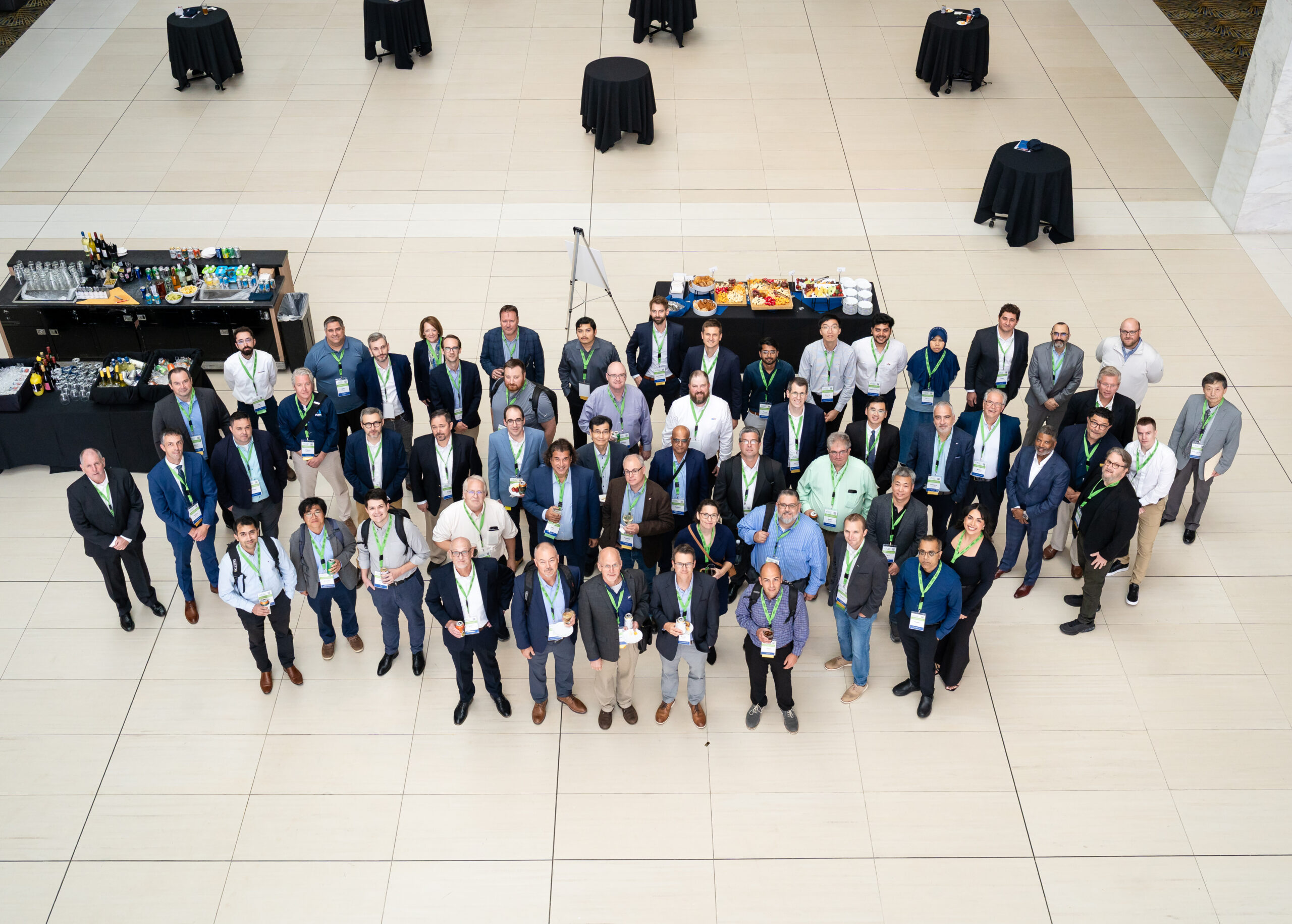
The Hydrogen Engine Alliance – North America brought together 96 attendees in Detroit for the Fall 2026 North American Hydrogen Engine Conference, held Sept. 15-16 at Huntington Place.
Over two days, researchers, engineers, industry leaders, policymakers, and technology developers examined what it will take to move hydrogen internal combustion engine technology forward, including engine performance, emissions, hydrogen production, infrastructure, safety, and real-world deployment.
The conference opened Sept. 15 with remarks from Vince Keenan, Head of Innovation Engagement for Mayor Mary Sheffield’s Office of Mobility Innovation, before turning quickly to one of the central questions facing the field. How ready is H2-ICE technology for wider use?
Joseph G. Spakowski, Director of Application Engineering for Fuel Injection Systems – Americas at PHINIA Inc., addressed that question in the opening keynote, “H2 ICE Is Ready Now!” His presentation highlighted PHINIA’s hydrogen engine development work, fleet activity, emissions testing, and its 2026 U.S. hydrogen vehicle tour.
That focus on practical application continued throughout Members Day.
Technical presentations explored the details that determine how hydrogen engines perform in practice, including surface engineering, combustion stability, lubricant development, and component durability. A panel on the H2-ICE journey and the road ahead brought together representatives from UC Riverside, FPT Industrial, Daimler Truck North America, Brunel University of London, and Lubrizol to discuss progress across the sector and the challenges that remain.
The afternoon shifted toward research and development efforts supported through the U.S. Department of Energy. Speakers from Dumarey, MAHLE, SuperTurbo Technologies, and Oak Ridge National Laboratory discussed ongoing work aimed at advancing hydrogen engine systems and related technologies.
As the formal sessions ended, the conversation continued in Huntington Place’s Riverview Atrium, where attendees gathered for a reception and conference banquet overlooking the Detroit River.
The second day widened the lens.
The conference opened to all registered attendees Sept. 16 with a keynote from Brian Ellis, Co-Director of the University of Michigan’s MI Hydrogen initiative and Associate Professor of Civil and Environmental Engineering. Ellis explored geologic hydrogen and opportunities for subsurface hydrogen storage in Michigan, bringing the discussion beyond the engine itself to questions of where hydrogen can come from and how it might be stored at scale.
That systems-level perspective carried into a production, handling, and policy panel featuring speakers from the University of Michigan, Bosch, the California Hydrogen Business Council, Air Liquide, and the Michigan Office of Future Mobility and Electrification.
The discussion reflected a challenge that surfaced repeatedly throughout the conference. Developing engines and vehicles is only one part of building a viable hydrogen ecosystem. Fuel production, distribution, storage, fueling infrastructure, economics, policy, and safety all have to advance alongside the technology.
Technical sessions later in the day approached those challenges from multiple angles.
Speakers from RWTH Aachen University, the University of Michigan, UC Riverside, the University of Oxford, FORVIA, Southwest Research Institute, and Colorado State University addressed hydrogen electrolysis, abnormal ignition and combustion, laboratory and on-road emissions testing, hydrogen storage systems, fleet decarbonization, hydrogen-capable power generation, and modeling for hydrogen engines.
The program also gave attendees opportunities to see the technology beyond the presentation screen.
Conference displays included the PHINIA H2-ICE demonstration vehicle, component displays from Bosch, and an engine display from Daimler Truck North America. OPmobility also hosted an exhibitor table during the conference, giving attendees another opportunity to connect directly with organizations working across the hydrogen mobility sector.
PHINIA’s retrofitted commercial van was featured following laboratory and on-road evaluation work in the United States, connecting several of the conference’s technical discussions to a vehicle attendees could see firsthand.
By the final session, attention had turned to another critical part of deployment – safety.
Experts from the Center for Hydrogen Safety and Pacific Northwest National Laboratory, Hydrogenium Consulting, Cummins, and Sandia National Laboratories discussed hydrogen hazards, vehicle safety, lessons from H2-ICE development, codes and standards, and the use of hydrogen technologies in marine applications.
Taken together, the sessions reflected how broad the hydrogen engine conversation has become.
Engine research remains central, but the questions surrounding H2-ICE increasingly extend into fuel supply, infrastructure, economics, policy, safety, and the practical realities of deployment. Bringing those perspectives into the same room gave participants an opportunity to compare approaches, identify shared challenges, and continue building connections across sectors.
H2EA-NA thanks the speakers, panelists, attendees, volunteers, exhibitors, and conference sponsors who contributed to the two-day event.
The Fall 2026 North American Hydrogen Engine Conference was supported by PHINIA, Daimler Truck North America, Sacramento Metropolitan Air Quality Management District, South Coast Air Quality Management District, and OPmobility.